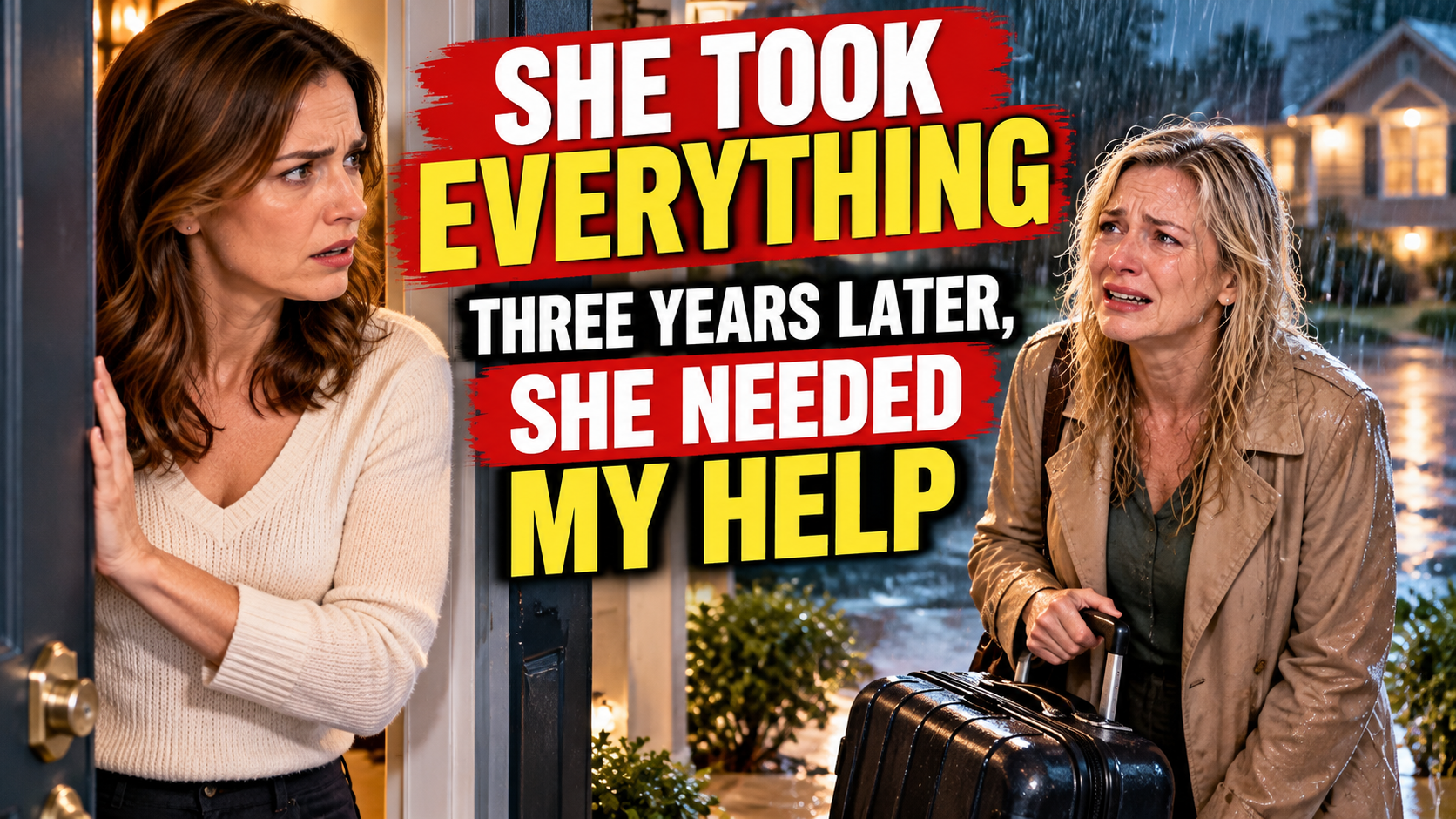
I hadn't seen my sister in three years when she showed up on my doorstep with a suitcase, a trembling hand, and the same blue eyes our mother had.
The last time we'd spoken, she'd told me I was greedy, selfish, and lucky to have received anything at all.
Now she was standing on my porch asking if she could sleep on my couch.
And the strangest part?
For a moment, I almost said yes.
The House Our Mother Left Behind
My name is Rachel. I'm 42, divorced, and the mother of a teenage son named Ethan. My younger sister, Melissa, is 38.
Growing up, Melissa was always the one people worried about. She was charming, impulsive, and somehow capable of turning every mistake into someone else's responsibility.
I was the dependable daughter.
When Dad died, I helped Mom manage the bills. When her arthritis worsened, I drove her to appointments. And when she was diagnosed with heart failure, I rearranged my work schedule so she wouldn't have to spend her final months alone.
Melissa visited when she could.
Sometimes that meant once a month. Sometimes it meant a phone call on Mother's Day.
I never kept score. At least, that's what I told myself.
Mom owned a modest three-bedroom house in Ohio. It wasn't luxurious, but it was paid off. She also had some savings and a small investment account.
She used to say, "When I'm gone, I want you girls to take care of each other."
I believed she meant it.
What I didn't know was that Melissa had been making plans of her own.
The Day Everything Changed
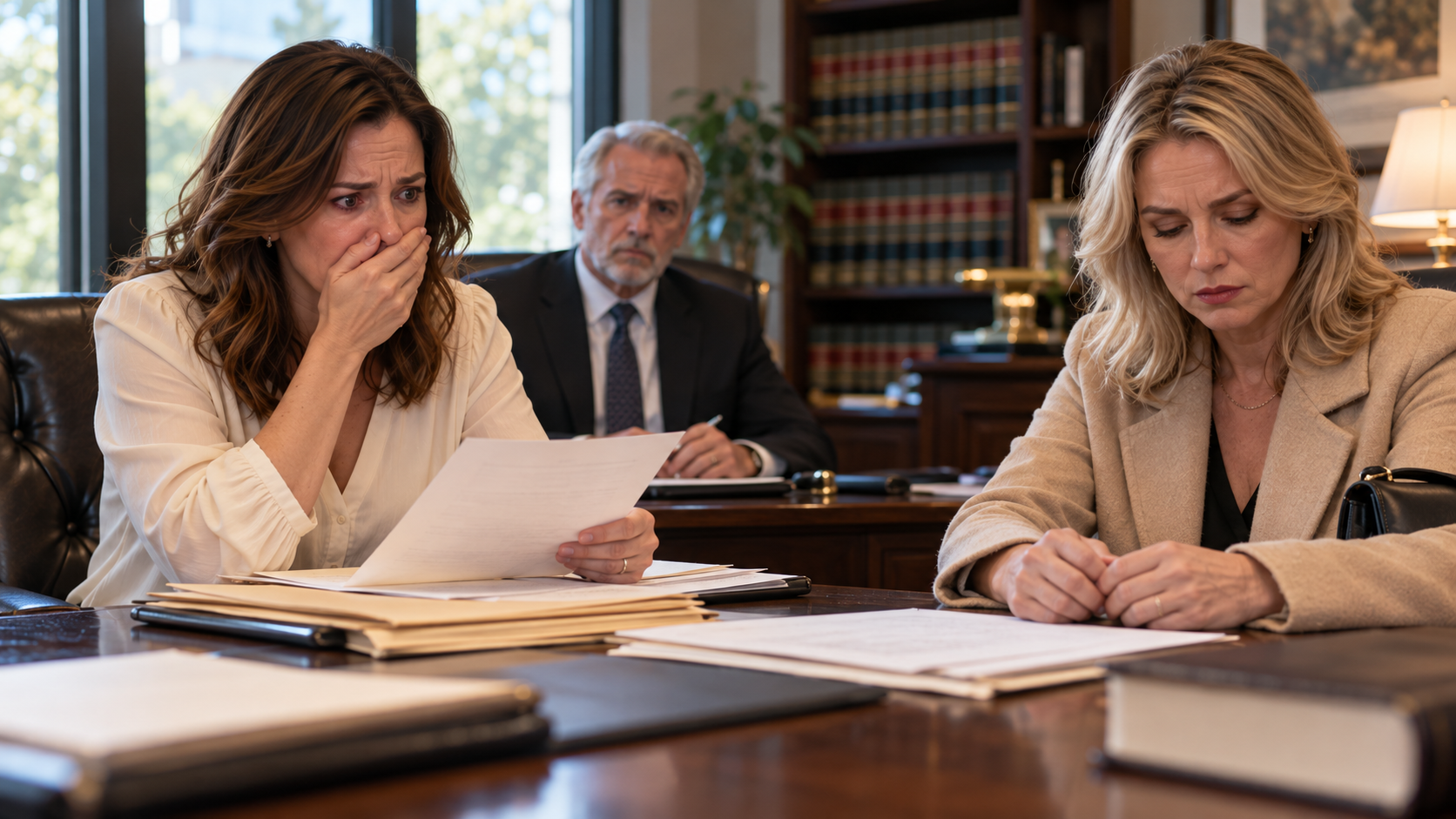
Two weeks after Mom's funeral, we met with the attorney handling her estate.
I expected paperwork, questions, maybe a few tears.
Instead, I learned that Mom had signed a new will eight months before she died.
Everything—the house, her savings, her investment account—had been left to Melissa.
My name wasn't mentioned except in a sentence acknowledging that I was her daughter.
I remember staring at the document, waiting for someone to explain the mistake.
Melissa wouldn't look at me.
The attorney explained that the will appeared properly executed and that Mom had been evaluated as mentally competent when she signed it.
I asked Melissa if she'd known.
She said, "Mom wanted me to be secure. You already have a job and a house."
I couldn't believe what I was hearing.
My house still had a mortgage. I had medical bills from my divorce, and I'd spent years using vacation days to care for our mother.
Melissa had recently lost another job and was renting an apartment she could barely afford.
Apparently, that made her more deserving.
I asked why Mom hadn't told me.
Melissa shrugged.
"Maybe she knew you'd react like this."
That sentence hurt more than the will.
The Conversation That Ended Our Relationship
A week later, I went to Mom's house to collect some photographs and a wooden jewelry box she'd promised me.
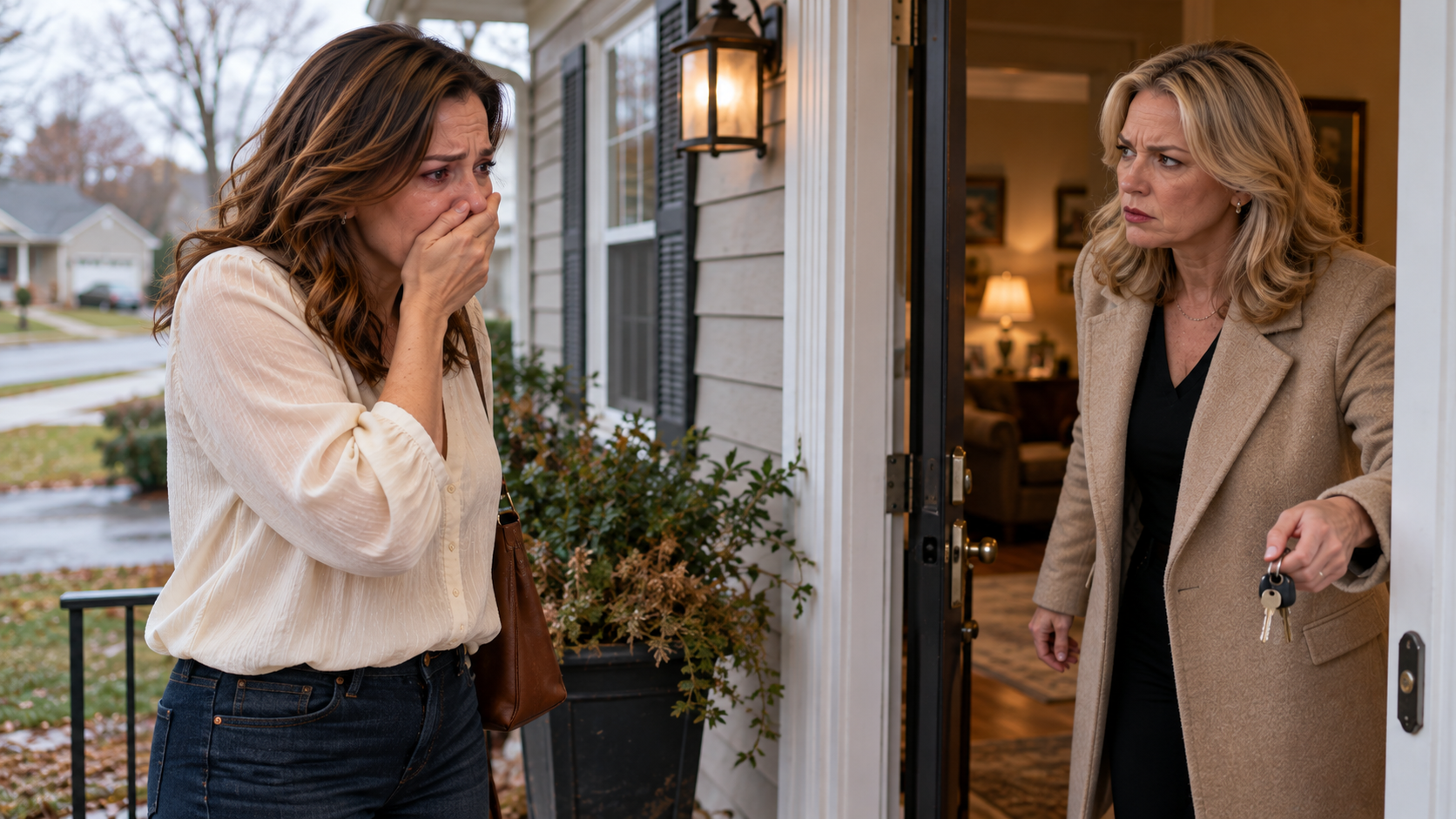
Melissa had already changed the locks.
She met me on the porch and told me the house belonged to her now.
I asked for the jewelry box.
She said she'd sold it.
It wasn't particularly valuable. Inside were a few inexpensive rings, an old watch, and the pearl earrings Dad had given Mom on their twentieth anniversary.
I didn't care about the money.
I cared that something Mom had worn every Sunday was gone.
Melissa told me I was being dramatic.
Then she said something I still remember word for word.
"You got to play the perfect daughter. I got the inheritance. Maybe that's just how things worked out."
I stood there for several seconds, unable to speak.
Then I told her that if she wanted everything Mom owned, she could have it.
But she wouldn't have me anymore.
I walked away.
For three years, we didn't speak.
Three Years of Silence
Those years weren't easy.
I worked overtime at the insurance company where I'd been employed for nearly fifteen years. I refinanced my mortgage, paid down my credit cards, and slowly rebuilt my savings.
Ethan graduated from middle school and started high school.
We took a small vacation to Lake Erie one summer. We adopted a rescue dog. We learned how to be happy without waiting for other people to make things right.
Sometimes I thought about Melissa.
I wondered whether she'd kept Mom's house. Whether she'd found steady work. Whether she ever looked at the family photographs and felt the same ache I did.
But I never called.
Not because I didn't miss having a sister.
Because I was tired of being the person who always fixed things.
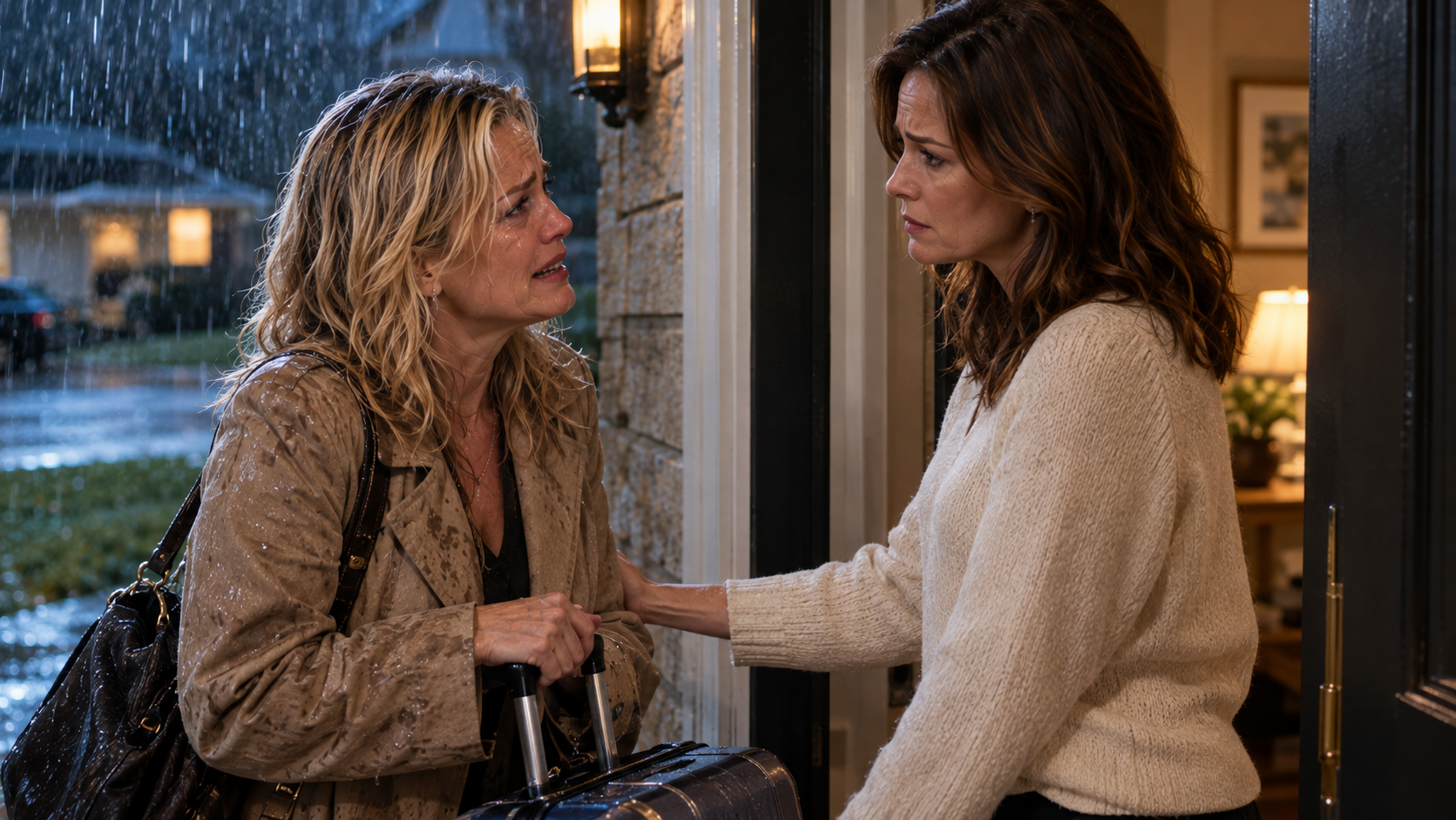
Then, on a rainy Thursday evening, someone knocked on my door.
The Woman on My Porch
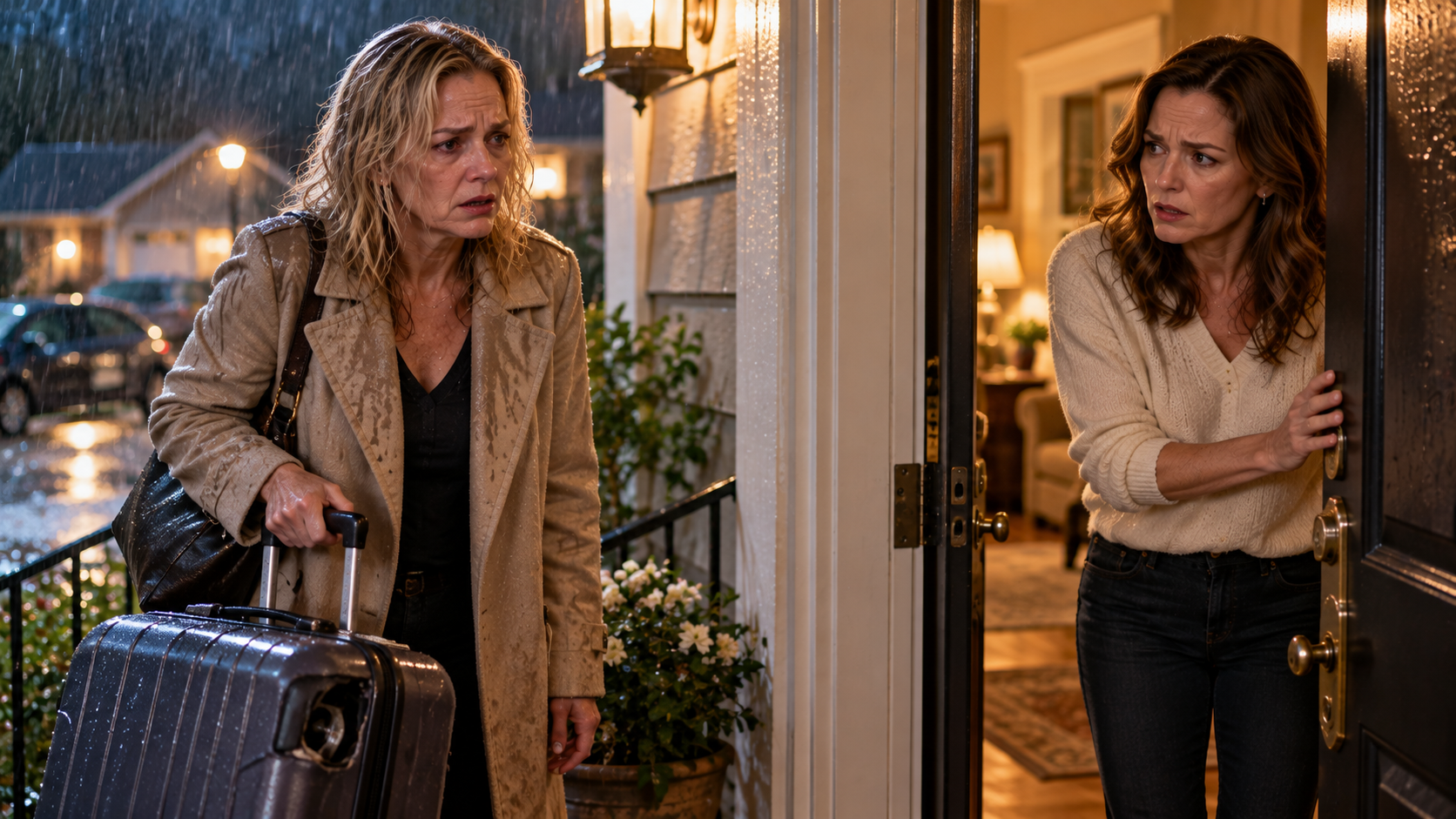
Melissa looked older than I remembered.
Her hair was pulled into a messy ponytail. Her coat was soaked, and she was holding a small suitcase with a broken wheel.
"Rachel," she whispered. "I didn't know where else to go."
I didn't invite her inside.
I asked what happened.
She started crying.
The house was gone.
She'd sold it eighteen months earlier, after falling behind on property taxes and taking out loans she couldn't repay.
Most of Mom's savings had disappeared into what Melissa described as a business opportunity with a man she'd been dating.
The business never opened.
The man left.
And now she was being evicted from her apartment.
She had less than $200 in her bank account.
I stood in the doorway, listening to the story.
Then she asked the question I'd somehow known was coming.
"Can I stay with you for a while? Just until I get back on my feet?"
I looked past her at the rain.
Three years ago, she'd stood on Mom's porch and told me I wasn't entitled to anything.
Now she wanted a room in my house.
The Apology I Had Waited Three Years to Hear
I asked her whether she remembered the day she'd changed the locks.
She lowered her eyes.
"Rachel, please. I know I hurt you."
I asked whether she remembered selling Mom's jewelry box.
She nodded.
Then she said, "I was awful to you. I know that now."
For a second, something inside me softened.
I'd imagined that apology so many times.
But I needed to know one thing.
"Would you be here if you still had the money?"
She didn't answer.
And that silence told me more than any apology could.
Finally, she said, "You're my sister."
I nodded.
"Yes. I was your sister when Mom died, too."
Melissa began crying harder.
She told me she was scared. She had nowhere to sleep. She couldn't afford a hotel, and the friends she'd relied on had stopped returning her calls.
I believed her.
I also believed that letting her move in could turn my home into another place where I was expected to sacrifice my peace to solve her problems.
Ethan was upstairs. My son had already lived through enough instability.
I wasn't going to invite more into his life without thinking carefully.
What I Offered Instead
I told Melissa she couldn't move in.
She looked at me as though I'd slapped her.
But before she could respond, I explained what I was willing to do.
I'd pay for three nights at a nearby motel directly. I'd help her contact local housing assistance programs. I'd drive her to a job interview if she needed transportation.
And if she wanted to rebuild our relationship, we could start with coffee.
No money.
No spare key.
No promises about the future.
Just coffee.
Melissa stared at me.
"That's it?" she asked.
I felt that familiar tightening in my chest.
I knew that tone.
It was the same one she'd used whenever someone gave her less than she wanted.
I told her it was all I could offer.
She picked up her suitcase.
"Mom would be ashamed of you."
For a moment, I almost changed my mind.
Then I remembered Mom sitting in her recliner, asking me to make sure Melissa would be okay.
I remembered promising I would.
And I wondered whether keeping that promise meant giving Melissa everything she asked for—or finally allowing her to take responsibility for herself.
I didn't know.
I still don't.
The Phone Call
The next morning, my aunt called.
Melissa had told her I'd thrown her into the street.
According to my aunt, I was being cruel. Family was supposed to help family, especially when someone had hit rock bottom.
I explained what I'd offered.
My aunt said three nights in a motel wasn't enough.
I asked whether Melissa could stay with her.
There was a long pause.
Then my aunt said her husband wouldn't be comfortable with that.
I didn't argue.
I simply said, "I understand. That's why I wasn't comfortable either."
She hung up shortly afterward.
By Sunday, two cousins had sent me messages about forgiveness, compassion, and how disappointed Mom would be.
Neither offered Melissa a place to live.
Neither offered to pay for a motel.
But both seemed very comfortable telling me what I should do.
The Letter I Never Expected
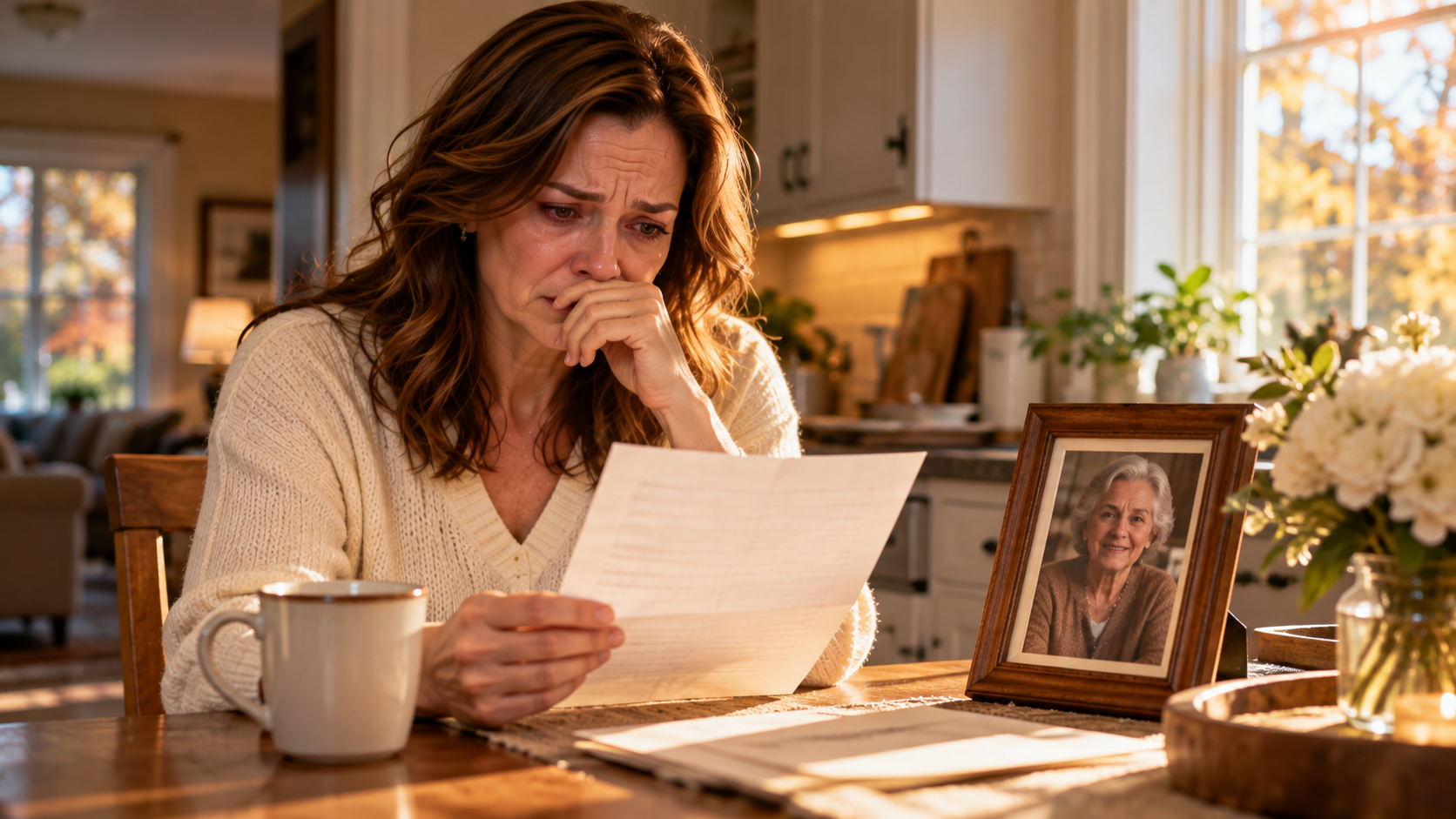
A week later, I received an envelope in the mail.
Inside was a short handwritten note from Melissa.
She thanked me for the motel. She said she'd found a temporary job through an employment agency and was staying with a former coworker while looking for something permanent.
Then came the part that made me sit down.
"I don't think Mom would be ashamed of you. I said that because I wanted to hurt you. I'm sorry."
She also admitted something I'd suspected for years.
She'd persuaded Mom to change the will by telling her that I was financially comfortable and that she was afraid of becoming homeless.
She wrote that Mom had asked whether I'd be upset.
Melissa had told her I wouldn't care.
I read those sentences several times.
For three years, I'd wondered whether Mom had loved me less.
Now I had an answer that was both comforting and devastating.
Melissa hadn't necessarily forced Mom to do anything. Mom had still made her own decision.
But the decision had been influenced by a story that wasn't true.
I folded the letter and put it in my desk.
For the first time in three years, I cried about the inheritance.
Not because of the house.
Because of all the conversations we could never have.
The Decision I Still Question
Two weeks later, Melissa asked if we could meet for coffee.
I said yes.
We talked for almost an hour.
She didn't ask for money.
She didn't ask to move in.
She asked about Ethan, my job, and whether I still made Mom's Sunday pot roast recipe.
When we left, she hugged me.
It was awkward. Uncertain.
But it was real.
I don't know whether we'll ever be close again.
I don't know whether I can completely forgive her for what happened.
And I don't know whether refusing to let her stay with me was the right decision.
Some people in my family think I was heartless.
Others say I was too generous to offer anything.
All I know is that I spent years believing being a good daughter and a good sister meant putting everyone else's needs ahead of my own.
I'm trying to learn that love doesn't always mean saying yes.
Sometimes it means leaving the door open without handing someone the key.
So tell me: Was I wrong for refusing to let my sister stay with me after she took our mother's entire inheritance? Or was I finally right to set a boundary?
Comments
Sign in to leave a comment.
New here? Already have an account?